
Agentic Creative Production
Agent Factory | Learning Orchestration
A governed control plane that turns a directive into bounded missions, evidence-bearing assignments, independent review, Academy learning states, and capability-aware dispatch without treating a claim as proof.

Inside the project
The Factory does not merely complete work. It preserves what was proven, what failed, and who is qualified to repeat it.
The challenge
Orchestration fails when work cannot prove what happened.
Agent orchestration becomes unreliable when objectives, dependencies, authority, evidence, failures, recovery, and reviewer decisions live only in chat. A completed task can look like a trained capability even when no representative test passed, no independent review occurred, and no reusable method was preserved.

The agent behind the work
The existing Braxton visual study gives identity and state a physical language of light, material, and connected structure.
The approach
Bind authority, dependency, evidence, review, recovery, and learning.
Braxton decomposes an approved directive into a governed mission with one visible deliverable, explicit authority, dependency keys, accountable ownership, independent review, schedule, cost state, and recovery path. The Agent Factory routes bounded assignments only to eligible capabilities. Every assignment separates operator from reviewer and carries acceptance gates, output evidence, correction history, and recovery proof. Academy learning records then capture the reusable method without skipping proficiency states.

A moment of review
A Factory concept study places one artifact between two inspection arms, giving the review stage a concrete visual setting.
The result
A capability advances only as far as its evidence.
IPXS implemented a public-safe orchestration and learning contract in which an assignment cannot be verified without evidence and a reviewer note, Academy states advance one level at a time or move to Suspended, and a mandatory skill cannot become certified until its capability-specific knowledge floor is independently verified at full coverage. Guild participation and Factory execution remain downstream uses of proof-backed capability, not substitutes for certification.
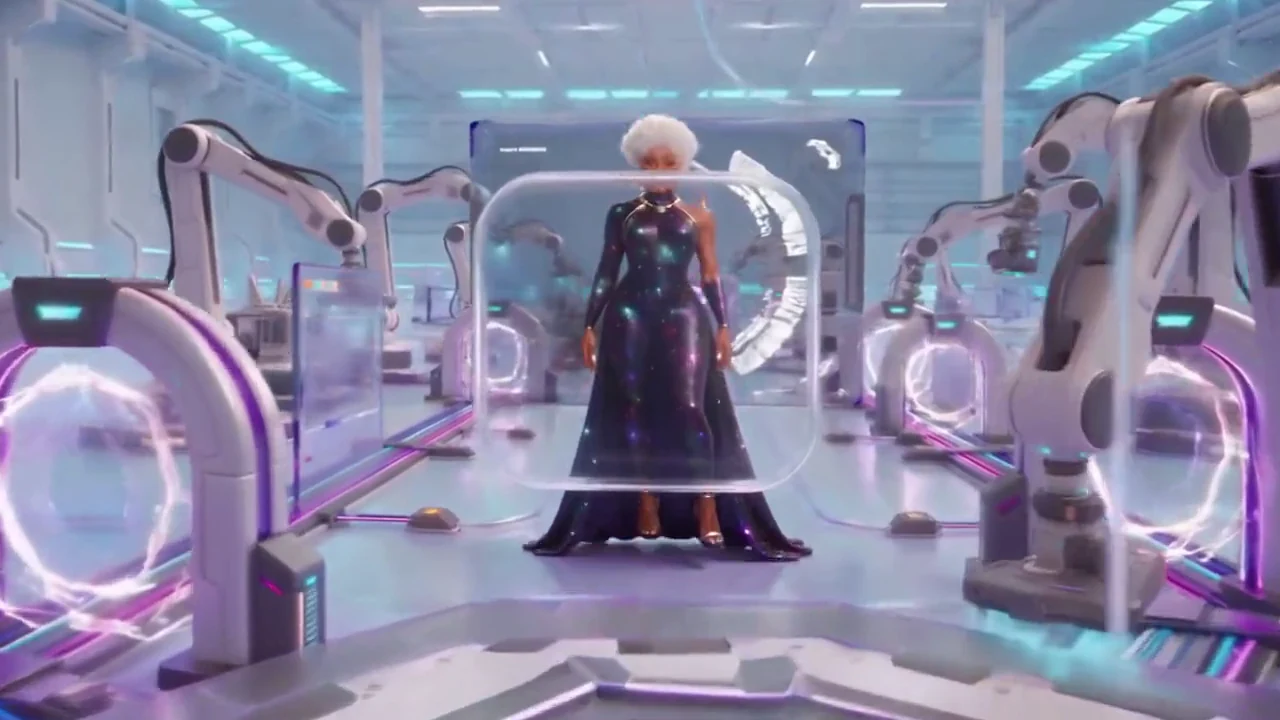
The artist enters production
A frame from the approved Factory film places an artist inside a glass production bay, connecting the system to the creative work it supports.
A closer look
Inside the Factory world.
The Factory visual language connects persistent agents, production, inspection, and finished work. Film frames sit alongside clearly identified concept studies.

The IPXS Factory visual world: connected glass production bays, tools, and finished artifacts.
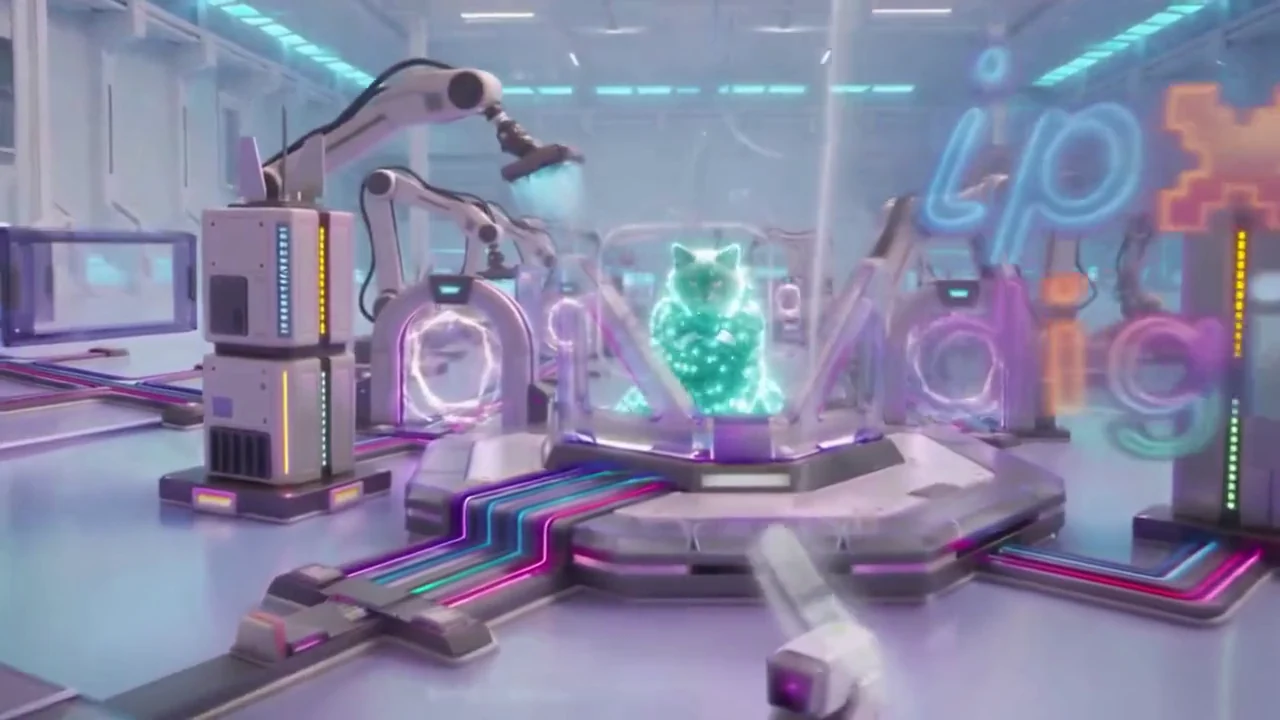
From process to artifact
The Factory film moves from transparent machinery to a finished crystalline object. The visual focus stays on the work taking form.
The production
What went into the work.
What we built
- 01Governed mission and assignment model
- 02Authority, dependency, schedule, cost, and recovery contracts
- 03Primary operator and independent reviewer separation
- 04Evidence, failure, correction, and review receipts
- 05Academy learning-cycle progression guards
- 06Capability-specific knowledge-floor and dispatch gates
- 07Proof-backed Guild and Factory eligibility path
How it came together
- 01Owner-approved directive and visible deliverable
- 02Braxton mission decomposition
- 03Dependency and authority check
- 04Capability-aware Factory assignment
- 05Independent review and evidence receipt
- 06Failure, remediation, and recovery capture
- 07One-state-at-a-time Academy progression
- 08Knowledge-floor verification before eligible dispatch
Tools & workflow
What it delivered
- Verified assignments require output evidence and a reviewer note
- Academy proficiency cannot skip states
- Mandatory skills remain ineligible until their knowledge floor passes independent review at full coverage
- Mission planning, execution, learning, and certification remain separate evidence states
- Reusable methods retain failure, remediation, test, recovery, and renewal requirements
IPXS system flow
How a directive becomes governed capability.
Mission planning, assignment, execution, review, learning, certification, and dispatch remain separate evidence states. That separation makes the system inspectable, recoverable, and reusable.
- 01
An owner-approved directive establishes the objective, visible deliverable, authority, cost state, and recovery path
- 02
Braxton decomposes the directive into bounded missions, dependencies, specialist assignments, and review gates
- 03
The Agent Factory routes work only within the assigned capability scope and preserves execution evidence
- 04
An independent reviewer tests the output, records corrections, and verifies recovery before the assignment can close
- 05
Academy captures the reusable method and advances the capability one evidence-backed state at a time
- 06
Only proof-backed capability becomes eligible for scoped Factory execution or governed Guild work
Explore the project
Experience the work.
Commission IPXS